Research & Articles

Shiven Tewari

My Research on Muscle Physiology & Hypertrophy

As part of my interest in fitness and physiology, I've conducted research and written several articles on muscle hypertrophy and physical training.

  1. What Is Hypertrophy and How Does It Happen?
  2. The Role of Motor Unit Recruitment in Building Muscle
  3. Why Training to Failure Isn't About Muscle Weakness
  4. How Exercise Stability Affects Hypertrophy Results
  5. The Force-Velocity Relationship in Hypertrophy Training
  6. Muscle Contraction Explained: From Brain to Biceps
  7. Understanding Central and Peripheral Fatigue in Training

What Is Hypertrophy and How Does It Happen?

A deep dive into what hypertrophy truly is and why mechanical tension—not just lifting heavy—is the key to muscle growth.

Key Points:
  • Hypertrophy occurs at the individual muscle fiber level through the addition of myofibrils (myofibrillogenesis), not across the entire muscle uniformly.
  • Mechanical tension, especially when actively generated during resistance training, is the primary driver of hypertrophy.
  • Mechanotransduction via structures like costameres signals increased muscle protein synthesis in response to tension.
Understanding Hypertrophy at a Physiological Level

Hypertrophy is a term that gets thrown around a lot in the fitness world, but few people really understand what it means on a physiological level. Most think of it simply as "muscle growth," but there's more to it than just getting bigger arms or legs. Hypertrophy is the increase in the cross-sectional area (CSA) of a muscle, and it happens through a process called myofibrillogenesis—the addition of new myofibrils within individual muscle fibers.

It's important to note that hypertrophy occurs at the muscle fiber level, not the whole muscle. This distinction is key when thinking about how to train for it. It's not about making the entire muscle "swell" uniformly, but rather about stimulating specific fibers to grow in size.

The Role of Mechanical Tension

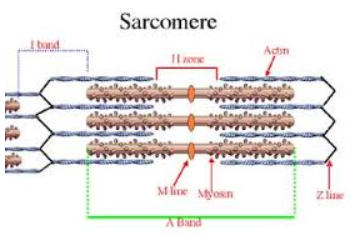
The most widely accepted driver of hypertrophy is mechanical tension. This isn't just about moving heavy weights. Active mechanical tension is the pulling force generated during the interaction between actin and myosin filaments inside a muscle fiber. Every time these filaments attach and detach in what's known as the cross-bridging cycle, tension is created. But it's not enough for tension to simply exist—it needs to be active and sensed by the muscle.

How Your Body Senses and Responds to Tension

That's where mechanotransductors come in. Structures like costameres detect this tension and trigger a biochemical cascade that increases muscle protein synthesis (MPS). In other words, your body senses the strain placed on individual fibers and responds by building more contractile material—more myofibrils—to handle future loads.

Practical Implications for Training

In summary, hypertrophy is a localized, fiber-specific response to mechanical stress. It's not just about how much you lift, but how effectively that load challenges your muscle fibers. Understanding this can completely reshape how you think about resistance training and why effort, form, and load all matter.

Hypertrophy isn't just about lifting more weight—it's about how effectively you challenge your muscle fibers with tension. By focusing on creating meaningful mechanical stress at the fiber level, you can train smarter and drive real growth where it matters most.
The Role of Motor Unit Recruitment in Building Muscle

Maximal effort is essential for muscle growth because it activates the largest, most hypertrophy-relevant motor units according to Henneman's Size Principle.

Key Points:
  • Motor unit recruitment determines how many muscle fibers are activated during training.
  • Henneman's Size Principle ensures that larger motor units are only recruited with higher effort levels.
  • Training to or near failure ensures maximum recruitment of all motor units in the target muscle.
Beyond Sets and Reps: The Importance of Motor Unit Recruitment

When it comes to building muscle, most people focus on sets, reps, and exercises. But behind the scenes, something far more critical is happening: motor unit recruitment (MUR). Understanding how your body recruits motor units—and why maximal effort matters—can transform the way you approach hypertrophy training.

Understanding Motor Units

A motor unit is a motor neuron and all the muscle fibers it innervates. The central motor command (CMC) activates motor units to produce force. In hypertrophy training, the goal is to recruit as many motor units as possible in the target muscle, ensuring that a maximum number of muscle fibers experience mechanical tension—the key stimulus for hypertrophy.

Henneman's Size Principle

This is where Henneman's Size Principle comes in. It states that motor units are recruited in order of size, from smallest to largest, depending on the intensity of the effort. That means low-effort movements only activate small, low-threshold motor units, while higher-effort movements recruit larger, high-threshold motor units—the ones that actually control the stronger, more hypertrophy-prone muscle fibers.

Training Implications

In practical terms, if you're not training with high effort, you're not fully tapping into your muscle's growth potential. The principle also explains why training close to or to failure is often necessary for hypertrophy: only then do the largest and most powerful motor units get recruited.

You can't grow what you don't recruit. If your goal is hypertrophy, then applying high effort is non-negotiable. Henneman's Size Principle makes it clear: the more effort you apply, the more of your muscle you activate—and that's where growth begins.

Why Training to Failure Isn't About Muscle Weakness

Muscle failure during training is driven by neural fatigue and rising perception of effort—not the muscle's inability to produce force.

Key Points:
  • Task failure is caused by perception of effort, not muscle force limits.
  • Corollary discharge compares expected vs. actual muscle feedback, influencing effort.
  • Stability in exercises reduces sensory overload and delays task failure.
Redefining Muscle Failure

Many lifters believe they reach failure during a set because their muscles can no longer produce force—but this isn't entirely accurate. In reality, what we commonly call "muscle failure" is actually task failure, and it's driven by something far more complex than just muscle strength.

Understanding Task Failure

Task failure occurs when you reach your maximum tolerable perception of effort—not when your muscles become physically incapable of producing force. This is evident in scenarios like drop sets, where after failing with a heavier weight, you can still lift a lighter one. Your muscles haven't stopped working; instead, your brain has hit its limit.

The Role of Corollary Discharge

This limit is governed by a phenomenon called corollary discharge. Every time your central motor command (CMC) sends a signal to the muscles to contract, it simultaneously generates a predictive signal—a corollary discharge. This prediction is compared to actual sensory feedback from the muscle. If they match, movement feels smooth. If they don't, the brain increases the perceived effort to maintain coordination.

How Fatigue Builds During Training

As you train, the mismatch between predicted and actual feedback grows. The more this mismatch builds, the more effort you feel, until you reach the point of task failure—where your nervous system can no longer tolerate the effort required to continue.

The Importance of Training Stability

Training in a stable environment becomes essential here. More stability means less sensory noise from the muscles, allowing the corollary discharge to stay accurate for longer. This lets you recruit more motor units before hitting task failure, enhancing your potential for hypertrophy.

You don't stop a set because your muscles quit—you stop because your brain decides you've had enough. By understanding how perception of effort and task failure actually work, you can train more effectively and design workouts that maximize motor unit recruitment and muscle growth.

How Exercise Stability Affects Hypertrophy Results

Stable exercises reduce sensory overload on muscles, allowing for greater motor unit recruitment before reaching task failure.

Key Points:
  • Task failure is influenced by perception of effort, not just muscle fatigue.
  • Stable exercises limit excess sensory input to the brain, delaying task failure.
  • More stability enables higher motor unit recruitment, promoting hypertrophy.
Task Failure Is Not Muscle Failure

Many lifters believe failure during a set means their muscles have exhausted their ability to generate force. However, this is a misconception. What we actually experience is task failure—when the brain can no longer tolerate the perceived effort required to continue the movement. This means the central motor command (CMC) is unable to continue recruiting new motor units to complete the task, even though the muscle may still be capable of producing force.

Corollary Discharge and Sensory Overload

Each time a muscle contracts, the brain sends out a signal to initiate movement, along with a copy of this signal known as a corollary discharge. This copy is compared with sensory feedback received from the muscles during movement. If the prediction (corollary discharge) matches the sensory feedback, the brain maintains coordination and effort feels manageable. If they don't match—due to increased sensory input—the perception of effort rises. When this mismatch becomes too great, task failure occurs.

Why Stability Matters

Stability in an exercise environment plays a key role in how soon the brain reaches this overload point. Stable exercises reduce the amount of sensory information the muscles send to the brain, which keeps the corollary discharge accurate for a longer time. This allows the brain to tolerate more effort, enabling greater motor unit recruitment before task failure is reached.

Impact on Hypertrophy

Hypertrophy requires high motor unit recruitment and high mechanical tension. When an exercise is unstable, you reach task failure prematurely due to heightened sensory feedback. This cuts the set short before larger motor units—those with the greatest potential for growth—are fully recruited. Stable exercises delay task failure, giving your nervous system the room to engage more fibers, sustain high effort, and ultimately generate better hypertrophy results.

Stability isn't just about form—it's a strategy to push your muscles further before failure sets in. Choosing more stable exercises can unlock deeper recruitment of muscle fibers and lead to better hypertrophy outcomes.

The Force-Velocity Relationship in Hypertrophy Training

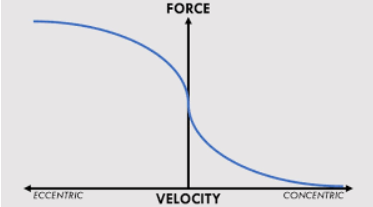
The Force-Velocity Relationship explains how contraction speed impacts muscle fiber force production and why heavy loads lifted with effort optimize hypertrophy.

Force-Velocity Relationship Curve

Source: YouTube: Flow High Performance

Key Points:
  • As contraction velocity increases, the force a muscle fiber produces decreases.
  • High effort is required to recruit more motor units, regardless of load.
  • Heavy weights lifted with high effort generate both high mechanical tension and high motor unit recruitment.
Understanding the Force-Velocity Relationship

The Force-Velocity Relationship (FVR) describes an inverse relationship: the faster a muscle contracts, the less force it can produce. Conversely, as contraction velocity slows down, the force a muscle fiber can produce increases. This principle has powerful implications for resistance training aimed at hypertrophy.

Effort and Load: Different Scenarios

Let's consider a few different training conditions. If you lift a light weight with high effort, you get high motor unit recruitment (MUR), but the movement is fast, meaning each fiber experiences low mechanical tension. That's not ideal for hypertrophy.

Now imagine lifting a light weight with low effort. The contraction speed slows, so the mechanical tension per fiber increases. However, since the effort is low, the overall MUR is also low—again, suboptimal for hypertrophy.

The Optimal Condition for Growth

The ideal hypertrophy scenario is lifting a heavy weight with high effort. In this condition, you get high MUR and a slow contraction velocity, which leads to high mechanical tension on each recruited fiber. This combination maximizes the hypertrophic stimulus by ensuring a large number of muscle fibers are under significant mechanical stress.

Maximizing hypertrophy isn't about just lifting heavy or light—it's about how load and effort interact through the Force-Velocity Relationship. When you apply high effort to heavy loads, you achieve both high motor unit recruitment and high mechanical tension—two key drivers of muscle growth.

Muscle Contraction Explained: From Brain to Biceps

A complete breakdown of the muscle contraction process, starting from neural signals in the brain and ending with actin-myosin cross-bridging at the fiber level.

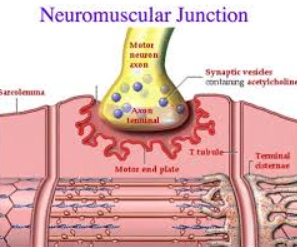
Neuromuscular Junction

Source: Website: unm.edu

Sarcomere

Source: Website: app.sophia.org

Key Points:
  • Muscle contraction begins with an action potential generated in the central nervous system.
  • Neurotransmitters and ion channels coordinate the electrical signal into a mechanical response.
  • Calcium release triggers cross-bridging between actin and myosin, producing force.
Initiating the Signal: Central Nervous System to Motor Neuron

It all begins with the central nervous system (CNS) generating an action potential that travels down to the motor neuron. This signal reaches the neuromuscular junction—a specialized synapse connecting the motor neuron to its corresponding muscle fibers.

Neurotransmitter Release and Synaptic Activation

At the axon terminal of the motor neuron, vesicles filled with the neurotransmitter acetylcholine (ACh) are triggered to release their contents into the synaptic cleft. The ACh molecules bind to receptors located in the post-junctional folds of the sarcolemma (the muscle cell membrane).

Ion Exchange and Depolarization

Once acetylcholine binds to its receptors, sodium (Na⁺) ions rush into the muscle cell while potassium (K⁺) ions exit, leading to depolarization. When this voltage change reaches a threshold, a second action potential is generated, spreading further along the sarcolemma and into T-tubules.

Calcium Release from the Sarcoplasmic Reticulum

The action potential in the T-tubules activates dihydropyridine receptors (DHP), which are linked to ryanodine receptors (RyR1) on the sarcoplasmic reticulum. This triggers the release of calcium ions (Ca²⁺) into the sarcoplasm—the fluid within the muscle cell.

Cross-Bridge Formation: The Moment of Contraction

Calcium binds to troponin, causing tropomyosin to move and expose binding sites on actin filaments. This allows myosin heads to attach to actin, forming cross-bridges. These cross-bridging cycles are the foundation of muscle contraction and force production.

Resetting the System: Repolarization and ACh Breakdown

After the contraction cycle, potassium re-enters and sodium exits the muscle cell, leading to repolarization. Acetylcholinesterase then breaks down acetylcholine in the synaptic cleft, ending the signal and preventing continued contraction until another action potential is initiated.

Muscle contraction is a finely tuned sequence beginning in the brain and ending with microscopic movements inside each muscle fiber. From neurotransmitters to ion shifts and calcium-triggered cross-bridging, every rep you perform is backed by a beautifully complex cascade of electrical and chemical signals working in perfect harmony.

Understanding Central and Peripheral Fatigue in Training

Central and peripheral fatigue both reduce exercise performance, but they do so through entirely different physiological pathways affecting recovery and hypertrophy.

Key Points:
  • Peripheral fatigue is caused by excessive calcium influx and leads to muscle damage and delayed recovery.
  • Central fatigue originates in the brain and spinal cord due to neurotransmitter depletion from high training volume.
  • Light weights to failure can create more fatigue than heavy weights, even if stimulus is similar.
The Nature of Fatigue in Resistance Training

Fatigue is not a one-dimensional phenomenon. In resistance training, two types of fatigue impact performance: central fatigue and peripheral fatigue. While both result in reduced performance, they stem from very different mechanisms within the body and must be understood to optimize training and recovery.

Peripheral Fatigue: Calcium and Muscle Damage

Peripheral fatigue occurs within the muscle cell itself. Every contraction releases calcium ions into the sarcoplasm to initiate cross-bridging. However, with excessive calcium influx—particularly during high-repetition or prolonged training—calcium-dependent proteases like calpains become activated. These proteases degrade critical contractile proteins such as actin and myosin. The result is not hypertrophy, but muscle damage, which actually delays recovery. Contrary to popular belief, muscle damage is not a driver of muscle growth—it's a limiting factor in training adaptation.

Central Fatigue: Neural Limits on Force Output

Central fatigue stems from the central nervous system, including the brain and spinal cord. It is especially relevant during high-volume training, where sustained neural drive is needed over extended periods. This demand depletes key neurotransmitters such as dopamine and acetylcholine, reducing the CNS's ability to maintain force output. As a result, performance drops—not because the muscles are incapable, but because the brain can no longer push them as hard.

Why Light Loads May Be More Fatiguing

Interestingly, lifting lighter weights to failure causes more fatigue than lifting heavier weights to failure. For example, if Person A lifts a heavy load to failure for 5 reps, and Person B lifts a light load to failure for 20 reps, both might receive a similar training stimulus—assuming both sets are done fresh. However, the light load creates more fatigue, especially peripheral fatigue, due to higher total volume and repeated calcium cycling. This has important implications for recovery and the sustainability of training intensity over time.

Understanding the distinction between central and peripheral fatigue is essential for building a sustainable and effective hypertrophy program. Not all fatigue is productive—some forms delay recovery and reduce performance without contributing to muscle growth. Training intelligently means managing both types to optimize output and results.